

A Honda tends to outlast the people who first bought it, and its keys rarely last as long as the car. We drive to your Civic, Accord, CR-V, Pilot or Odyssey in Broward, Miami-Dade and Palm Beach, work out which of Honda’s key styles you have, and cut or program the right one on the spot.
The Honda that outlives its keys
Drive through any parking lot in Broward or Palm Beach and count the Hondas. Many of them are ten, fifteen or even twenty years old and still run without complaint. The engine and the transmission were built to keep going. The little plastic key in the owner’s pocket was not built to keep going quite as long, and that gap is where most of our Honda calls begin.
A key in a car this durable ends up carrying a long history. It has been dropped on driveways, left on dashboards in July, washed in pockets and handed from a parent to a teenager to a neighbor. By the time it finally cracks or stops responding, the owner often has no second key at all.
This page explains how Honda keys are built, how the styles differ from model to model, and what happens when we replace one at your car. Use the model list on this page as a starting point, and expect us to confirm the details by VIN before anything is cut.
Start button or keyhole: the first look we take
Before we say anything about price, parts or time, we ask one question. Does your Honda start with a button, or with a turn of a key? That single detail separates the two main families of Honda keys, and it is not always obvious from the year alone.
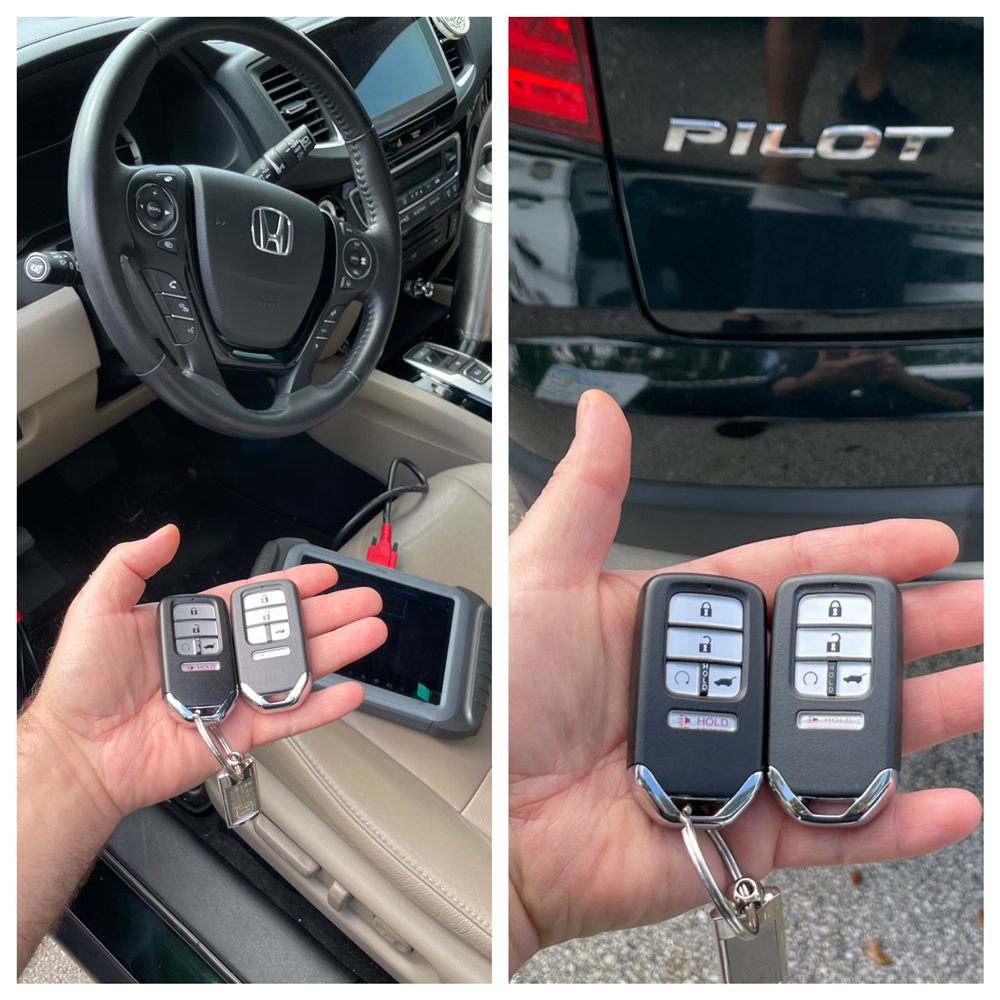
On newer Civics, Accords, CR-Vs and Pilots, higher trims usually have a start button and a proximity fob that can stay in a pocket. The base trim of the very same model and year can still have a keyhole and a chip key. Standing next to each other on a dealer lot, those two cars look nearly identical. Their keys have almost nothing in common.
- Start button on the dash: a smart key system, programmed as a fob
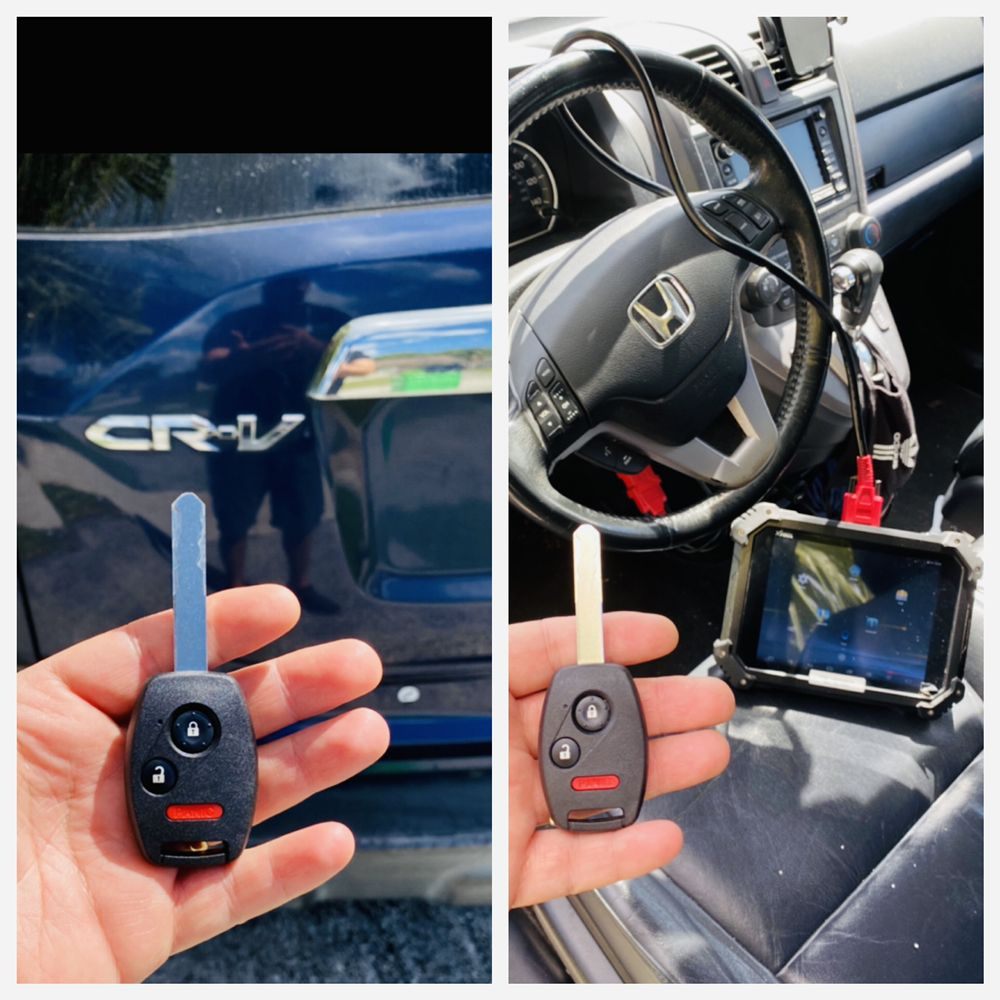
- Keyhole in the column: a chip key, sometimes with buttons in the head
- Both can appear on the same model in the same year
- A hidden metal blade inside a smart fob is only for the door lock, not for starting
Honda models, years and key types
This list shows the key systems we commonly see on Honda vehicles in South Florida, grouped by model and model year range. Key type can change by trim level and production date within a range, so we always confirm the exact key from your VIN and the car itself before cutting or programming anything.
| Years | Key type | Notes | |
|---|---|---|---|
| Civic | |||
| 2003 to 2005 | Transponder key | Transponder key; confirmed for 2003 to 2005 by key listings. | |
| 2006 to 2012 | Transponder key | Transponder key, with a remote-head key on many trims. (varies by trim) | |
| 2013 to 2015 | Transponder key | Transponder or remote-head key on most trims; a smart key is listed for some trims. (varies by trim) | |
| 2016 to 2025 | Push to start smart key | Smart key on higher trims; base trims may use a keyed transponder key. | |
| Accord | |||
| 2003 to 2007 | Transponder key | Transponder key, with a separate remote on many trims. (varies by trim) | |
| 2008 to 2012 | Transponder key | Transponder key; remote-head key on many trims. (varies by trim) | |
| 2013 to 2017 | Push to start smart key | Smart key on higher trims; keyed trims use a remote-head key. Smart key listed 2013 to 2015. (varies by trim) | |
| 2018 to 2025 | Push to start smart key | Smart key on most trims. | |
| CR-V | |||
| 2002 to 2006 | Transponder key | Transponder key; confirmed for 2002 to 2006. | |
| 2007 to 2014 | Transponder key | Transponder key with remote-head key on many trims. (varies by trim) | |
| 2015 to 2016 | Push to start smart key | Smart key on higher trims; base trims use a keyed key. (varies by trim) | |
| 2017 to 2025 | Push to start smart key | Smart key on higher trims; base trims may use a keyed transponder key. (varies by trim) | |
| Pilot | |||
| 2003 to 2008 | Transponder key | Sidewinder-style transponder key (2003 and later). | |
| 2009 to 2015 | Transponder key | Transponder key or remote-head key. (varies by trim) | |
| 2016 to 2025 | Push to start smart key | Smart key on most trims. | |
| Odyssey | |||
| 2003 to 2010 | Transponder key | Sidewinder-style transponder key (2003 and later). | |
| 2011 to 2013 | Transponder key | Transponder or remote-head key. (varies by trim) | |
| 2014 to 2025 | Push to start smart key | Smart key on higher trims; keyed trims may use a remote-head key. (varies by trim) | |
| Element | |||
| 2003 to 2011 | Transponder key | Transponder key; confirmed for 2003 to 2005, assumed same through 2011. (varies by trim) | |
| Fit | |||
| 2007 to 2014 | Transponder key | Transponder key. (varies by trim) | |
| 2015 to 2020 | Push to start smart key | Smart key on higher trims; base trims use a keyed key. (varies by trim) | |
| HR-V | |||
| 2016 to 2025 | Push to start smart key | Smart key on higher trims; base trims may use a keyed transponder key. (varies by trim) | |
| Ridgeline | |||
| 2006 to 2014 | Transponder key | Transponder key. (varies by trim) | |
| 2017 to 2025 | Push to start smart key | Smart key on most trims; some trims may use a keyed key. (varies by trim) | |
| Crosstour | |||
| 2010 to 2015 | Push to start smart key | Smart key listed for 2013 to 2015; earlier years likely transponder. (varies by trim) | |
| Insight | |||
| 2010 to 2014 | Transponder key | Transponder key. (varies by trim) | |
| 2019 to 2022 | Push to start smart key | Smart key. (varies by trim) | |
| Passport | |||
| 2019 to 2025 | Push to start smart key | Smart key. (varies by trim) | |
| Clarity | |||
| 2018 to 2021 | Push to start smart key | Smart key, confirmed 2018 to 2020. | |
Three eras of Honda keys
Honda’s key history is easier to follow in three chapters. The dates blur at the edges, because each model moved on its own schedule, so treat these as the usual pattern rather than a rule.
Before the chip
Older Hondas used plain metal keys with no electronics. A hardware store could copy one in a minute. If you own something from that era, the key is just a key, and the job is a simple cut.
The chip arrives
Honda began adding immobilizer chips to its keys in the early 2000s, and a Honda service bulletin from 2000 already describes chip keys with the chip inside the grip. From then on, the car checked for a hidden chip before the engine would run. Many Hondas of the 2000s and into the early 2010s use a transponder key, in some cases with the remote buttons built into the head and in others with a separate fob.
Fobs that stay in your pocket
Smart keys with push-button start became common around 2013 and spread across most of the lineup through the years 2016 to 2020. By now most Hondas people see on the road are proximity cars. Base trims have held on to the keyed ignition longer than anyone expected, which is why the first question above matters so much.
Pilot and Odyssey: the milled blade kiosks cannot copy
Some Pilot and Odyssey keys from 2003 onward carry what locksmiths call a sidewinder cut. Instead of notches along the edge of the blade, the pattern is milled into the middle of the metal. The blade looks thicker and smoother, and it takes a dedicated cutting machine to reproduce.
This is behind a story we hear often. A parent takes the minivan key to a kiosk in a shopping center, pays for a copy, and finds that it slides into the door lock but will not turn. The kiosk machine simply cannot follow a groove cut into the center of the blade. Nothing is wrong with the minivan.
We carry the machine that does this work, so the blade is cut where the vehicle sits. The chip is a separate matter, and we program it to the car afterward. Our page on laser cut high security keys shows how this style of blade differs from an ordinary one.
Model by model, from Fit to Ridgeline
The table on this page lists each Honda model with its usual key. Here is how to read it in plain words. Most of the entries come with a medium confidence note, which is why we phrase everything as usual or common and then check your actual car.
Civic and Accord
These two carry the most traffic, so they carry the widest range of keys. Chip keys dominate the 2000s. Smart keys take over the higher trims in the mid 2010s, and by the late 2010s a start button is the normal thing to expect, though some Civic base trims still use a keyed ignition.
CR-V, HR-V, Passport and Ridgeline
The crossovers and the pickup follow the same arc. Older CR-Vs and Ridgelines use chip keys, and newer ones lean on proximity fobs. The HR-V and Passport arrived in the smart key era, so they begin with fobs, although a few trims may still turn a key.
Fit, Element, Crosstour and Insight
The Fit starts with chip keys and moves to a smart key on higher trims in its last years. The Element is a chip key vehicle. The Crosstour has a smart key listed for its later years, and the Insight changed from chip keys to smart keys between its two generations. With cars like these, we always check the VIN rather than trust a general rule.
Clarity
The Clarity was sold only in the smart key era, so its key is a proximity fob with a hidden emergency blade.
A week in the life of a South Florida Honda
Our region is hard on small electronics, and a key is a small electronic device that spends its life in a hot car.
Heat on the dashboard
A key tossed on the dash after a summer commute can bake for hours. Plastic heads turn brittle, and the rubber pads under the buttons wear flat. A remote that only works when you press with your thumb nail is telling you the pad is gone.
Salt and sand near the water
Drivers who park near the beach in Fort Lauderdale, Hollywood, Pompano Beach or Boca Raton bring salt air into everything. Ignition cylinders gather grit, and a key that feels rough going in is wearing out the cylinder as well as itself.
Student cars and shared cars
A well-worn Civic is a classic first car, and it often arrives with one key. When a family shares a single CR-V between two adults, that one key is a daily risk. The moment it disappears, a small spare job turns into a larger lost-key job.
Rentals, fleets and winter residents
Rental and company sedans change drivers constantly, and keys go missing between shifts. Seasonal residents leave Accords parked for months, and a fob battery that was fine in April can be dead by November.
Call Pro Locksmith at (954) 406-8266. Tell us the year, make and model and where the car is parked, and we will confirm what your vehicle needs before any work starts.
When the last key is gone
An all keys lost job means no key remains that your Honda recognizes. We confirm ownership, read the VIN, cut a blade that fits the lock, and then introduce brand new keys to the car. On a Honda, that process also removes the old keys from the car’s memory.
That is useful when a key has been stolen, because the missing key will no longer start the vehicle. It also means that a key you find under a seat next month will be useless. If there is any older key you want to keep working, bring it to the appointment so we can program it along with the new ones.
Our pages on lost all keys service and lost all car keys replacement describe the general process, and the details above are what apply to Honda in particular.

Spare first, emergency later
Adding a key while a working one still exists is the easiest version of this work. The car already knows a valid key, the old one stays valid, and the new one is simply added to the list.
Most people wait until they are down to one key before thinking about a spare, and that is the last moment it feels easy. A spare cut and programmed today costs time on a calm afternoon. The same key after the original disappears costs more steps, more waiting and a harder morning.
Keep the extra key at home in a dry drawer, not in the glove box. A spare that lives in the car is lost with the car.
If you want to go one step further, have two spares made in the same visit. Programming a second one while the technician is already connected adds very little time, and it gives you a key for the house and another for a trusted family member.
Proof we ask for, and why
Anyone can call a locksmith, so we protect you by confirming that the Honda is yours before we make a key. We ask for government photo identification and a document connecting you to the car, such as the registration, the title, or a lease or insurance paper in your name. We also read the VIN, which sits at the base of the windshield and on the driver’s door jamb.
A company car needs a letter from the business. A car bought this week can usually be handled with the bill of sale and your ID while the title is still being processed.
- Your photo ID, matching the paperwork
- Registration, title, lease or insurance document
- Access to the VIN
- All the keys and fobs you still have, whole or broken
The appointment, from the driveway
Call and describe what happened. Tell us the year and model, say whether there is a start button, and tell us if any working key survives. That is usually enough for us to describe what the job involves before anyone drives anywhere.
The technician arrives at your home, office or parking space anywhere in Broward, Miami-Dade or Palm Beach. After checking your documents, we examine the ignition and the old key, then cut the blade if one is needed. Programming comes next, followed by a full test of starting, locking, unlocking and the remote buttons.
Nothing is towed and nobody has to leave the car behind. When a car will not start, that is the whole point of a mobile visit.
Why a copied Honda key can turn the lock and still not start the car
A cut blade is only half of a chip key. Inside the head is a tiny transponder that the car must recognize before it lets the engine run. If the chip is missing or has not been introduced to your Honda, the key will turn the ignition and the dashboard will wake up, but the engine will stay silent.
Cheap keys bought online make this worse. Some are sold as compatible and then turn out to carry the wrong chip, or the wrong remote, for your car. Smart fobs can be locked to another vehicle and cannot be reused.
Our page on transponder keys explains the chip in more detail. If you already own an online key that does not work, bring it along and we will tell you honestly whether it can be saved.
- Right cut, wrong chip: the engine will not start
- Right chip, wrong cut: the key will not turn
- Smart fob tied to another car: it cannot be used
- Worn ignition: even a perfect key may feel stiff
Looking after a Honda fob
Small habits make a fob last. Replace the battery as soon as the range shrinks, before it fails completely. When you open the case, note what kind of cell is inside rather than guessing.
Keep keys off the dashboard and out of damp bags and wet beach towels. Do not hang a heavy bundle from the ignition, because that weight wears the cylinder. A single light ring is kinder to the car.
Early warnings are easy to spot. A key that sticks, a remote that works in only one spot, or a dash light that flickers when you start are all worth a visit while the problem is still small.
When the cylinder is the culprit
Sometimes the new key is perfect and the car still balks, because the real fault lives in the ignition. A tired cylinder can refuse a good key. A weak battery can imitate a key problem. A damaged wire near the ignition can interrupt the chip’s signal.
We look for these before we blame the key, and we can repair or replace a worn cylinder when the car needs one. If a key has snapped off in the lock, see broken key extraction. If you are standing outside a locked car, see car lockout service.
Where mobile service stops
Most Hondas can be handled right where they are parked. A few newer smart key models may need steps that only a dealer can perform. We tell you which group your car belongs to, normally on the phone before we leave.
Even then, the rest of the trouble is still ours to help with, such as opening a locked door, pulling out a snapped key or fixing a worn ignition. If you are unsure, give us the year, the model and whether there is a start button, and we will explain what applies.
Common questions
My Honda key turns but the engine will not start. What is wrong?
Most often the chip in the key does not match the car, or the key is a copy with no chip at all. The blade can be cut perfectly and still fail, because the Honda looks for the chip before it runs. A worn ignition or a weak battery can also mimic this. We test the key, the chip and the ignition on site.
How do I know if my Civic or Accord has a smart key?
Look for a start button on the dash. If you see one, the car uses a smart key and a proximity fob. If you see a keyhole, it uses a chip key. Trim decides this on many newer Hondas, so two cars from the same year can differ. Give us the VIN and we confirm which one yours takes.
Why did the kiosk key fail on my Odyssey?
Some Odyssey and Pilot keys from 2003 onward use a sidewinder cut, with the pattern milled into the middle of the blade. Basic kiosk machines cannot follow that groove, so the copy looks right and will not turn. We bring the machine that does cut it, then program the chip to your van at the curb.
If I lose every key, will my old keys still work afterward?
No. On a Honda, an all keys lost job clears the earlier keys from the car’s memory. That protects you if a key was stolen, but it also silences a key you find later. If you want a particular key to keep working, bring it to the appointment and we will program it together with the new keys.
Is it really worth cutting a spare when the car runs fine?
Yes. With one working key, the job is a straightforward addition. After the last key disappears, the work grows longer and more involved. Heat, humidity and salt air also wear keys down sooner here. Keep the spare in a dry spot at home instead of the glove box, and schedule the second key before you need it.
What paperwork do you need before cutting a Honda key?
We ask for your photo ID and a document that ties you to the car, such as the registration, title, lease or an insurance card, plus the VIN. This keeps keys out of the wrong hands. A company vehicle needs a written note from the business, and a newly bought car can often proceed with the bill of sale.
Can you program my Honda fob without towing the car?
On most models yes. A technician comes to the car, programs the fob in place, and then tests the start button, the remote buttons and the door locks. If a particular newer model needs dealer-level steps, we explain that on the phone first. Bring all your fobs so they can be programmed in one visit.
My remote barely works. Do I need a new key?
Not necessarily. A weak battery is the usual cause, and worn button pads come next. Replace the battery first and see whether the range returns. If the case is cracked or the buttons no longer respond, we can replace the shell or program a new fob. Bring the old one so we can test it before you spend anything.
Call Pro Locksmith at (954) 406-8266. Tell us the year, make and model and where the car is parked, and we will confirm what your vehicle needs before any work starts.