

Mini keys follow BMW security, so a Cooper is a small car with a serious key system behind it. Pro Locksmith in Fort Lauderdale comes to your Mini in Broward, Miami-Dade or Palm Beach County to identify the generation, replace lost keys, add spares and program fobs on site.
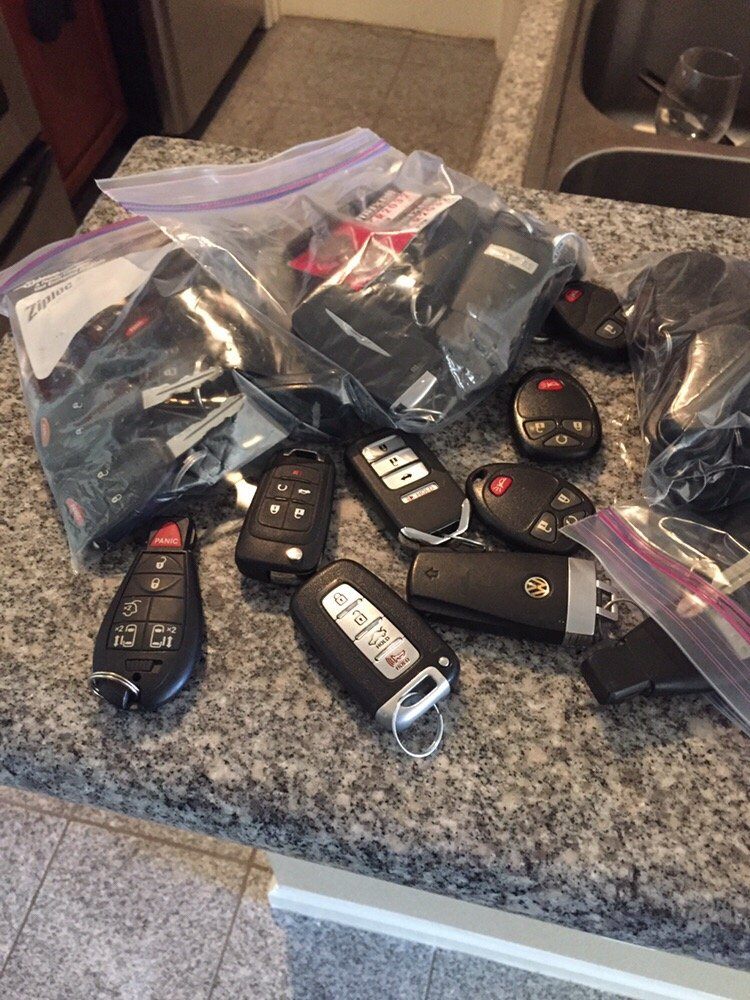
Why a Mini Key Is a BMW Key in Disguise
Mini is a small British brand with big German security. The cars are built under BMW ownership, and the key systems follow BMW designs from the first generation to the newest. That is good news and bad news. The good news is that the technology is well understood by technicians who work with European cars. The bad news is that it is more involved than a typical economy car key.
Every Mini key has an immobilizer chip and needs professional programming. A hardware store can cut a metal blade, but the car will not start unless the key is registered. Mini sells a small range of models, so this page has a shorter model list than a larger brand, yet the details inside each generation matter.
We cover the Cooper Hardtop, the Convertible, the four-door Hardtop, the Clubman, the Countryman, the Paceman, the Coupe and Roadster, and the electric Cooper SE. Our sister page on BMW car keys explains the family these systems come from.
Three Generations, Three Kinds of Key
The simplest way to understand Mini keys is to split them into three groups by the age of the car. Each group uses a different style of security, and each brings its own repair path.
- First generation, about 2002 to 2006: an EWS system with a transponder blade key and a remote.
- Second generation, about 2007 to 2013 and the cars built alongside it: a fob that slides into a slot in the dash, with proximity entry called Comfort Access on some cars. This is a CAS-era system.
- F-series cars, from about 2014 on: a proximity key with push-button start, built on a CAS4-style system.
- Odd corners such as the Paceman, the Coupe and the Roadster, which share the key family of the cars they were built beside.
Mini models, years and key types
This list shows the key systems we commonly see on Mini vehicles in South Florida, grouped by model and model year range. Key type can change by trim level and production date within a range, so we always confirm the exact key from your VIN and the car itself before cutting or programming anything.
| Years | Key type | Notes | |
|---|---|---|---|
| Cooper Hardtop | |||
| 2002 to 2006 | Transponder key | EWS system. Source describes a transponder blade key. | |
| 2007 to 2013 | Remote head key | Sources describe a Comfort Access fob. Verify by VIN. (varies by trim) | |
| 2014 to 2025 | Push to start smart key | CAS4-style hands-free key. | |
| Cooper Convertible | |||
| 2005 to 2008 | Transponder key | EWS system, same family as R50. (varies by trim) | |
| 2009 to 2015 | Remote head key | Verify by VIN. (varies by trim) | |
| 2016 to 2024 | Push to start smart key | CAS4-style key. (varies by trim) | |
| Cooper Hardtop 4 Door | |||
| 2015 to 2025 | Push to start smart key | CAS4-style key. (varies by trim) | |
| Clubman | |||
| 2008 to 2014 | Remote head key | CR2032 battery drain is a common issue. Comfort Access on some cars. (varies by trim) | |
| 2016 to 2024 | Push to start smart key | Not sold in the US for 2015. (varies by trim) | |
| Countryman | |||
| 2011 to 2016 | Remote head key | Comfort Access on some cars. Verify by VIN. (varies by trim) | |
| 2017 to 2025 | Push to start smart key | CAS4-style key. | |
| Paceman | |||
| 2013 to 2016 | Remote head key | Same key family as the R60 Countryman. Verify by VIN. (varies by trim) | |
| Coupe and Roadster | |||
| 2012 to 2015 | Remote head key | Same key family as the R56. Verify by VIN. (varies by trim) | |
| Cooper SE (Electric) | |||
| 2020 to 2025 | Push to start smart key | F56 platform key system. (varies by trim) | |
First-Generation Minis: Blade Keys With EWS
The earliest Minis sold in the US, the R50 and R53 Cooper and Cooper S, and the R52 Convertible, use a transponder blade key with a remote. You turn the blade in the ignition, and the chip inside the key tells the car it is allowed to start.
BMW’s own early systems of this kind work in a particular way. The immobilizer module can hold only a limited number of keys, and a lost key can be disabled in the car’s memory so that it never starts the car again. That matters for anyone who lost a key at a beach or a parking lot and worries that a stranger could use it.
Our data rates the R50 and R53 as high confidence on key type. For first-generation cars, the usual job involves reaching the immobilizer module, not just plugging a tool into the port. We explain what that means for a visit later on this page. See also transponder keys.
Second-Generation Minis: The Slot-In Fob
From about 2007, Minis moved to a fob that inserts into a slot in the dash. This covers the R56 Cooper Hardtop, the R57 Convertible, the R55 Clubman, the R60 Countryman and the R61 Paceman, along with the R58 Coupe and R59 Roadster, which share the same family as the R56.
Some of these cars have Comfort Access, which lets the doors unlock as you approach with the fob. The data is clear that this was an option on some cars and not others, which is why we recommend checking by VIN.
The slot itself is a wear item. A fob that sticks, goes in with effort or loses contact can look like a bad key when the slot is the real culprit. We check both before we recommend a replacement. Our page on remote-head keys covers fobs built into a blade.
F-Series Minis: Proximity Keys and Push-Button Start
Newer Minis, the F55, F56, F57, F54 and F60 cars, use a proximity key with push-button start. You carry the key, touch the door handle and start the car with a button. Our data describes it as a CAS4-style key and rates the F56 Cooper Hardtop and the F60 Countryman as high confidence.
The electric Cooper SE uses a hands off style key on the same platform as the F56. Learn how these keys work on our push-to-start smart keys page.
Because these cars follow later BMW designs, they are the most involved Minis for an all keys lost job, and some work needs dealer-level tools. We confirm your exact car by VIN, tell you what applies, and say so plainly if a dealer is the right choice.
Finding your Mini chassis code and what it tells us
Mini owners often know their car by a short code rather than by a model year, and that code is the shortest route to the right key. The first generation carries the codes R50, R53 and R52. The second generation covers the R56 Cooper Hardtop, the R57 Convertible, the R55 Clubman, the R60 Countryman, the R61 Paceman and the R58 and R59 Coupe and Roadster. The newer cars carry F codes: the F55, F56, F57, F54 and F60. Each group lines up with one of the three key families on this page.
You can usually find the code in the owner’s manual, on the registration paperwork or in an online listing for your car. If you cannot find it, the VIN gives us the answer. We prefer to work from the VIN anyway, because our data marks several of the second generation cars as medium confidence, and the notes on those cars say to verify by VIN. Comfort Access, the proximity entry system, was fitted to some second generation cars and not others, so two cars with the same code can still differ.
Why does it matter to you? Because a code tells us how many ways a job can go wrong. An R50 or R53 points to a blade key and the older immobilizer. An R56 or R60 points to a slot-in fob and a slot that may be worn. An F56 or F60 points to a proximity key and the most involved all keys lost job. When you call, give us the code if you know it, plus the VIN, and we will explain the path for your car. It is a short conversation that saves time.
Call Pro Locksmith at (954) 406-8266. Tell us the year, make and model and where the car is parked, and we will confirm what your vehicle needs before any work starts.
What Mini Owners in South Florida Run Into
Minis are popular in Fort Lauderdale, Miami Beach and Palm Beach because they are easy to park and fun to drive. Their keys live a hard life. Heat in a parked Mini cooks the battery inside the fob. Salt air near the water corrodes contacts, and sand gets into the dash slot on convertibles.
Convertibles bring a special trouble. Tops go down, keys sit on a seat or a cup holder in the sun, and a fob can slide into a bag or fall out at a stoplight. We hear from Cooper Convertible owners more often than you might expect.
Used-car buyers are another group. Many Minis arrive from auctions or northern states with a single key, and some owners have never seen a spare. A key that is the only one in existence is a warning sign, so a spare made now is a smart step.
Seasonal and fleet Minis
Cars that sit through the summer can develop a weak car battery that makes the key seem dead. Rental and delivery Minis often lose keys during turnover, and the company wants old keys removed from the car’s memory. We can handle both at your site.
Adding a Spare Versus All Keys Lost
Adding a spare when you still have a working key is the more direct path. The car already trusts one key, and we use that connection to add another. Our [[key-programming]] page describes the basic process.
All keys lost on a Mini takes more work. With no working key, the car cannot teach a new one. On first-generation cars, the immobilizer module generally has to be accessed. On later cars, jobs depend on the generation of the system and on whether the module has been protected by software updates. This principle comes from BMW work: some modules are software-locked and must be read on the bench instead of through the port.
On the newest cars, having one working key can decide whether a job is simple or complicated. If you are down to one key, make a spare before it is too late.
If you lose a Mini key: what it means for your car
Losing a Mini key raises a fair worry: could a stranger use it? The answer starts with how the car stores its keys. On BMW family systems, which Mini follows, the car holds a list of the keys it accepts, and a key that is no longer wanted can be barred from that list. So when a key goes missing at a beach, a marina or a parking lot, the right step is usually to add a new key and remove the lost one from the car’s memory, not to live with the risk.
This is a reason to call sooner rather than later. If you still have one working key, we can often add a replacement and deal with the lost key in the same visit, which keeps the process direct. If every key is gone, the job is larger, and the path depends on the generation of the car, as the sections above explain. In either case, tell us how the key was lost, because a key that was stolen with a bag deserves a different level of caution than one that fell behind the sofa.
Rental and delivery Minis are a special case. When drivers change often, old keys that nobody can account for are a risk, and a company may want them removed from the car’s memory. We can handle that at your site. Whatever your situation, bring any key you can find, even a damaged one, plus the proof of ownership we describe on this page. We will then explain, before we start, what can be done on the spot and what is better handled another way. There is no pressure on you and no guesswork on our side, only a plain explanation first.
What We Need From You
Because a Mini key can start the car and open the doors, we make keys only for the owner or someone the owner has authorized. We ask for the following.
- Proof of ownership, such as a driver license that matches the registration or title.
- The vehicle identification number. It is on the dash near the windshield and on the driver door jamb.
- Every key you still have, even broken ones. A damaged fob helps us identify the generation.
- A safe, level place to work. Driveways, garages and parking lots are fine.
How a Visit Works
We are a mobile service based in Fort Lauderdale. You call and tell us what happened, we ask about the model, the year and the type of key you remember, and a technician arrives at your car in Broward, Miami-Dade or Palm Beach County.
On arrival we check your ownership and the VIN, look at the ignition and any key you still have, and identify the system. If a blade must be cut, we cut it on site. We then program the key and test the locks, the remote buttons and the start function.
If the job calls for something beyond what we can do at the curb, such as module work on the bench or dealer-level communication, you hear it from us before we start.
What Makes Mini Keys Tricky
The first trap is the mixed fob family. Several Minis look alike but use different fobs, and a replacement fob that matches in shape may not match in security. The data recommends confirming the exact fob part number or FCC ID before ordering a replacement, and we do that.
The second trap is the imported fob. Keys sold for other countries can use different radio frequencies, so a fob from overseas may unlock nothing on a US car. We have seen owners pay for a fob that never worked.
The third trap is the used key. On later BMW family cars, used keys generally cannot be moved between vehicles. A second-hand fob is usually bound to its original car.
Mini Fob Care and Battery Tips
Many Mini key calls begin with a weak battery. A few good habits help you avoid a surprise.
- Replace the small coin battery when the range drops. The data notes that a coin battery drain is a common issue on the Clubman fob.
- Keep the fob out of direct sun on a dash or seat, especially in an open convertible.
- Rinse sand and salt off after a beach day, then dry the fob fully before using it.
- Clean the dash slot on slot-in cars. Lint and sand can cause the fob to stick or lose contact.
- Do not carry the only key. Keep a working spare at home.
Broken Keys, Stuck Fobs and Lockouts
Some Mini calls have nothing to do with a lost key. A blade that snapped in the ignition needs careful removal, and our [[broken-key-extraction-service]] page explains how. A fob that sticks in the slot or will not come out needs a gentle touch to avoid damage.
If you are locked out with the key inside, our [[car-lockout]] service opens the Mini without harm to the paint or the door seals. Minis have tight door frames, and a careless tool can scratch or bend them.
If the engine turns over but does not start, the cause may be a chip or programming issue, not the key blade.
When a Dealer Visit May Be Needed
Because Mini security follows BMW, some work on the newest cars belongs at a dealer or needs dealer-level tools. We tell you early if your Mini is in that group, and we explain your options without pressure.
A dealer visit can also be wise when the key is not the real problem. Water getting into the car’s electronics, a failed antenna, a weak car battery or a failing module can all look like a key fault. A new fob will not fix them, and we will say so.
Mention any past water leaks, collisions or electrical repairs when you call. They can change the plan.
Choosing the Right Replacement
On first-generation cars, you can often choose a standard blade key with a separate remote or a combined unit. On slot-in cars, you may want a fob with the same features as your original. On F-series cars, the proximity key is the only sensible choice.
Whatever your Mini, we recommend ending the visit with two working keys. A second key does more than save you time. On newer cars it keeps your options open if the first one fails.
Tell us how you use the car, and we will recommend the simplest, safest path.
Common Questions About Mini Keys
These are the questions we hear most from Mini drivers. If yours is not here, call with your model and year.
Common questions
Is a Mini key the same as a BMW key?
They are related but not the same. Mini keys follow BMW security systems, yet each fob is made for Mini and registered to one car. A BMW fob cannot be used on a Mini. We confirm your exact fob by VIN and, where needed, by part number or FCC ID before we order or program anything.
Can you make a Mini key if I lost all of my keys?
In many cases yes, depending on the generation. First-generation cars generally involve reaching the immobilizer module. Later cars depend on the system and whether it is software-locked. The newest cars may need dealer-level tools. Call with your model, year and VIN, and we will tell you plainly what applies before any work begins, including whether a dealer is the better route.
My Mini fob sticks in the dash slot. Is it the key?
Not always. On slot-in cars the slot itself wears, and sand, lint or a worn contact can make a good fob stick or lose connection. We check both the fob and the slot at your car. If the slot is the problem, replacing the key will not fix it, and we tell you before you spend anything on a new key, which saves you money.
Does my Mini have Comfort Access?
Some second-generation Minis do and some do not. Comfort Access lets the doors unlock as you approach with the fob in your pocket. You can tell by trying a door handle with the key in your pocket, or by looking at the VIN. We confirm this before ordering a replacement fob, because the two types are not interchangeable.
Can I buy a Mini key online and have you program it?
Sometimes, but be careful. Fobs sold for other countries may use different radio frequencies, and used fobs are usually bound to their original car. Send us the VIN and we help you check whether a key will work before you buy. We would rather prevent a wasted purchase than fix it afterward, and we are glad to answer before you buy.
What proof do I need to get a Mini key made?
We need proof that the car is yours. A driver license that matches the registration or title is the usual combination, plus the vehicle identification number. If the car belongs to a business, bring paperwork that shows you may act for the company. We ask every customer, because it protects the real owner.
Why does my Clubman fob stop working so often?
Battery drain on the small coin cell is a common issue on the Clubman fob, and South Florida heat makes it worse. Try a fresh battery first. If the problem continues, the cause may be moisture in the fob, worn contacts or the car itself. We test both at your location and explain what is needed, whether that is a battery, a cleaning or a new fob.
Do you service the electric Mini Cooper SE?
Yes, we identify the key and work out what applies by VIN. The Cooper SE uses a proximity key with push-button start on the same platform as the F56. Because it follows later BMW designs, some work may need dealer-level tools. We tell you plainly at the start what we can do for your car.
Call Pro Locksmith at (954) 406-8266. Tell us the year, make and model and where the car is parked, and we will confirm what your vehicle needs before any work starts.